
Image credit: Google
Quite a bit of Fiji’s specialties and artworks is an impression of the nation’s Polynesian and Melanesian legacy. Customarily, ladies’ artworks and men’s specialties are discrete, the ladies prevalently responsible for ceramics (pottery) and the men of woodcarving. Sadly this unique range of Fijian talent and many more are diminishing as western lifestyle seems to be more and more indulging in the lives of everyday Fijians. Though at risk, the Fijian government together with numerous are trying their best to revive the culture and artistic virtue of the local people.
Craftswomen from Fiji are also known for making tapa, or masi, which is formed out of the bark of mulberry trees and after that beautified with dark and rust-hued structures, intermittently with stencils speaking to a specific town or family. Masi was customarily utilized as an undergarment and generally connected with social ceremonies, yet is presently regularly given as a blessing on formal events and utilized as inside decorations. The island of Vatulele, found south of Viti Levu, is famous for its masi work.
Female craftsman additionally make mats and bins by weaving together leaves of the pandanus tree (and now and again the coconut palm). The procedure includes numerous means, including gathering, de-thorning, bubbling, drying and blanching the leaves and after that enhancing the woven mats with outskirts of shaded fleece. The mats come in various sizes and are frequently given as wedding blessings and are a prevalent vacationer thing in Fiji. Craftswomen additionally make taa, a sensitive and hard to create material produced using the youthful, unripe leaves of palm trees, which is utilized to form caps and satchels.
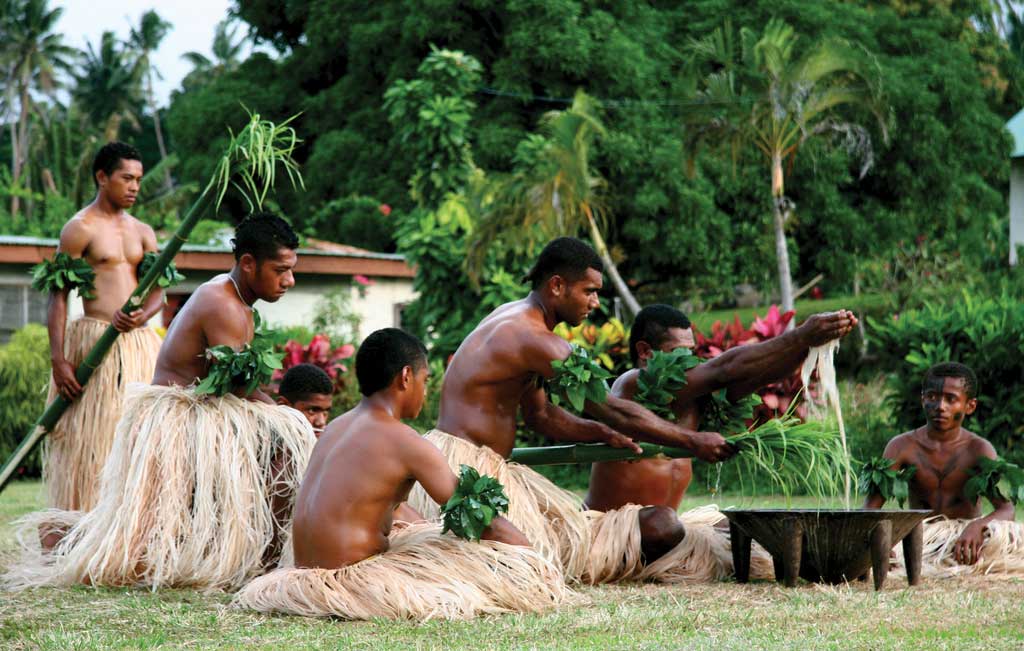
Male craftsman in Fiji, in the interim, are most acclaimed for their dazzling woodcarving work. Generally, the woodcarving procedures and plans were utilized for molding things, for example, barbarian forks, yaquona vessels and lances and clubs utilized in fighting. A portion of these woodcarvings can be found in plain view at The Fiji Exhibition hall in Suva while others can at present be purchased from neighborhood craftsman. The Tanoa drinking bowl, utilized for serving kava, Fiji’s national beverage, is the most well-known wood carved thing accessible for procurement.
The advancement of arts and culture and the safeguarding of customary artworks are a significant piece of Fiji’s improvement methodology. The Bureau of Culture and Legacy arranges expressions occasions and endeavors to keep up and grow a business opportunity for customary crafted works from Fiji. It additionally sorts out the Melanesian Expressions and Social Celebration, which is held at regular intervals. For some, little islands creating states the center has been to keep up and remain in front of the improvement weights and difficulties which have been applied on them for a long time or even hundreds of years especially from universal, outer and national requests and impact. At same time less accentuation has been put on the feasible utilization of the bounty of the normally happening assets of the land and ocean just as the acknowledgment of the customary learning holders of expressions of the human experience and sciences which are regularly disliked and marked as having a place with the past and not proper in ‘The present world’.
The long haul benefits for little island creating states protecting, upgrade and advance little islands substantial and immaterial social legacy won’t just help with structure national pride however will likewise address issues on personality by advancing shared comprehension between people in various local gatherings towards a serene conjunction and will guarantee the duration of customary information and practices for self-supportable networks dependent on normally happening assets and expertise for who and what is to come.
 Fiji, a take on its natural and cultural wonders